The Ancestral Temple and Ip Man
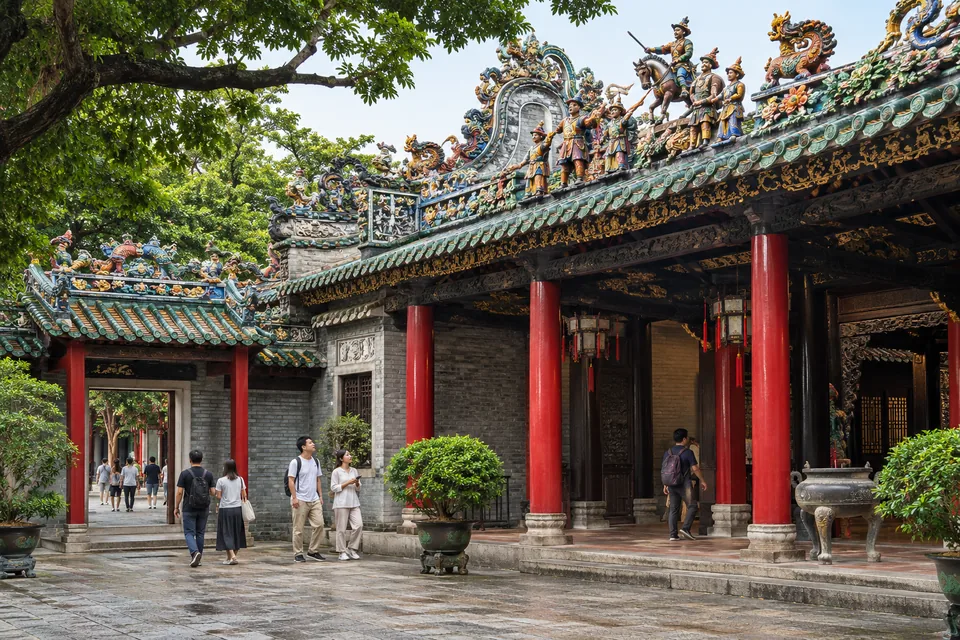
Ip Man was a Foshan martial artist associated with Wing Chun. Inside the Ancestral Temple complex, Ip Man Hall traces his branch of the martial art.

For New Zealanders in the Greater Bay Area
West of Guangzhou, Foshan has built industries around the crafts of its towns. Shiwan still has a working Ming-era pottery kiln, while Longjiang's furniture makers supply the trade around neighbouring Lecong. In Shunde, the cooking is a reason to visit in its own right. In central Chancheng, the Ancestral Temple tells the story of Foshan's Wing Chun tradition.
Foshan and Guangzhou are closely connected, but Foshan West railway station, central Chancheng and Shunde serve different destinations. Use Foshan Metro and China Railway for the relevant part of your journey.
Foshan First People's Hospital is at 81 Lingnan Avenue North, Chancheng. Telephone: +86 757 8316 3155 for outpatient, appointment and passport patient-record enquiries.
The joint measures provide specified document exemptions when a foreign worker with a Guangzhou or Foshan permit applies again in the other city. The exemption depends on the transfer circumstances; a new employer still needs the applicable permit application. Read the document with your employer before relying on a previous permit.
Foshan lies west of Guangzhou. Chancheng contains the historic centre; Nanhai and Shunde have centres of their own, while Sanshui and Gaoming extend farther west. A weekend around the Ancestral Temple and a round of furniture meetings in Shunde take you to different parts of this five-district city.
Living & visiting
Chancheng's temples, a meal in Daliang or a walk on Xiqiao Mountain
Chancheng brings together the Ancestral Temple and Shiwan's pottery heritage. It is the starting point for the city's martial-arts museums and ceramic craft.
Daliang is a good place to try Shunde's Cantonese cooking. UNESCO named Shunde a Creative City of Gastronomy in 2014. If you have a factory meeting after lunch, check which town your host is in before booking transport.
Xiqiao Mountain is Nanhai's forest-and-heritage outing beyond Chancheng and Daliang. The operator gives its south entrance on Huanshan Avenue in Xiqiao Town, with a site map, transport information and reservation links. Check the entrance and current transport notices when arranging the local transfer.
Ip Man was a Foshan martial artist associated with Wing Chun. Inside the Ancestral Temple complex, Ip Man Hall traces his branch of the martial art.
Qinghui Garden in Daliang grew through generations of additions. Ponds, halls and smaller enclosed gardens break up the walk, with carved blue-brick moon gates framing the route.
Shunde cooks bring out the flavour of the ingredients in dishes such as double-skin milk, a lightly sweet milk dessert, and Jun'an steamed pork, traditionally served at village banquets. Culinary skills are also the subject of public policy. Shunde's 2024 report to UNESCO identifies the Shunde Chef Academy and local vocational schools in its training plans. For a council or hospitality-school exchange, ask a training provider how restaurants help set the curriculum and where trainees gain work experience.
Shunde's 2024 Creative Cities report and training plans (PDF)
Nanfeng Ancient Kiln is a Ming-era pottery kiln with more than 500 years of ceramic-making history. Alongside the city's building-products industry, Shiwan preserves the craft of making pottery by hand.
For New Zealand community and WeChat introductions, tell NZGBA your city, a little about yourself and whether you live locally or are visiting. Introductions depend on available contacts and group administrator approval.
Business & industry
Furniture, appliances, ceramics and specialist exhibitions
Longjiang has furniture manufacturers and materials suppliers; nearby Lecong has trading markets and showrooms. Lunjiao makes woodworking and glass machinery. If you are comparing finished furniture ranges, start by researching Lecong. For production or materials, look at Longjiang; for manufacturing equipment, look at Lunjiao.
Nanzhuang and Shiwan in Chancheng are useful stops for architectural ceramics. The Foshan Uniceramics Expo lists 19-22 April 2027 for its products and technology exhibitions. A tile importer can shortlist wall or floor tile makers in the catalogue, then request the finish, batch reference and test report for a particular sample. A production engineer looking at machinery should search the equipment exhibitors and ask to see a line running the intended tile size. The two visits need different people at the table.
Uniceramics Expo: dates and exhibitor catalogue · Search the Foshan ceramics exhibitor catalogue
Beijiao, Shunde District
Longjiang; furniture trade in Lecong, Shunde
Nanzhuang and Shiwan, Chancheng District
Lunjiao, Shunde District
Population: 9.792 million (end of 2025)
Area: 3,798 km²
2025 GDP: RMB 1,316 billion (about NZ$315.3 billion)
NZD conversion uses the same-year SAFE annual average.